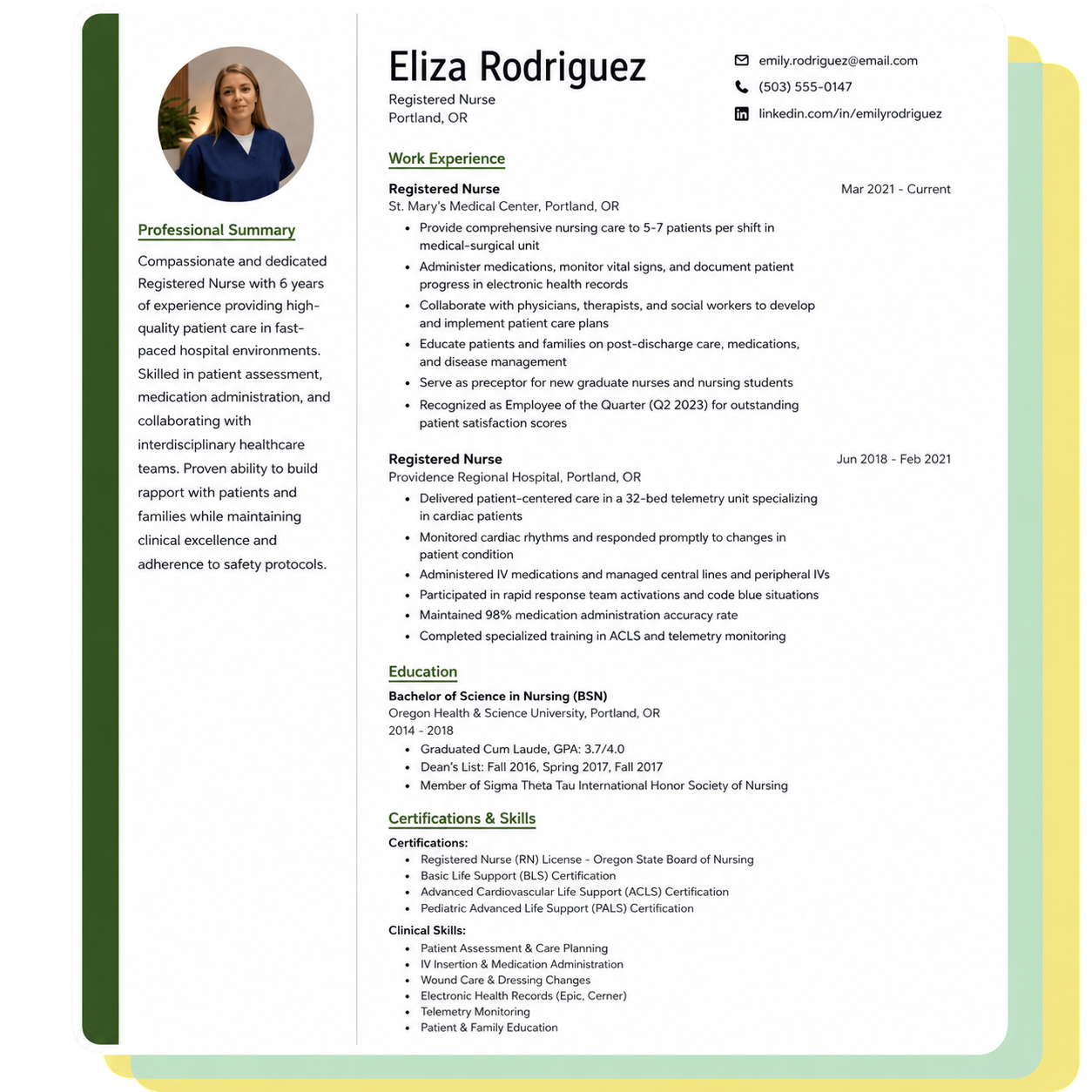
The AI writes it for you
Listing clinical rotations, certifications, and EMR experience is hard to phrase. Super Resume’s AI knows exactly what nursing hiring managers look for — just answer a few questions and it builds your resume for you.
What to Include on a Nursing Resume
A strong nursing resume goes beyond listing your degree. Recruiters and ATS systems scan for specific credentials and clinical details. Here’s what to include:
- Nursing license — State, license number, and expiration date (RN, LPN, APRN, etc.). You can verify your active license through Nursys, the national nurse license verification system.
- Certifications — BLS, ACLS, PALS, CEN, CCRN, and any specialty credentials
- Clinical experience — Unit type, patient population, bed count, and shift details
- EMR / EHR systems — Epic, Cerner, Meditech, Allscripts — name the systems you have used
- Specialties — ICU, ER, L&D, OR, med-surg, pediatrics, oncology, telemetry, etc.
- Education — Degree (BSN, ADN, MSN), school, and graduation year
- Patient ratios — Shows workload capacity and the acuity you can manage
- Soft skills in context — Charge nurse duties, preceptor roles, quality improvement projects
Super Resume’s AI prompts you for all of this information and formats it the way hospital recruiters expect to see it.
Frequently Asked Questions
What should a nursing resume look like?
A nursing resume should be one to two pages, with clear sections for your license and certifications at the top, followed by clinical experience, education, and EMR skills. Use reverse-chronological order and bullet points that start with action verbs. Avoid dense paragraphs — recruiters scan, they don’t read.
How do I list my nursing license on a resume?
Include your license type (RN, LPN, APRN), issuing state, license number, and expiration date. If you hold a Nurse Licensure Compact (NLC) license, note that too. Place it near the top of your resume, either in a credentials section or directly under your name.
How do I write clinical experience with no nursing job yet?
List each clinical rotation with the unit type, facility name, number of hours, and what you did. Treat each rotation like a job entry. Focus on patient populations you worked with, procedures you performed, and any charge or preceptor responsibilities. Super Resume’s AI is specifically designed to turn clinical rotation details into professional bullet points.
What certifications should I include on a nursing resume?
Always list BLS and ACLS if you hold them. Add any specialty certifications relevant to the role: PALS for pediatrics, TNCC for trauma, CCRN for critical care, CEN for emergency, or NRP for labor and delivery. Write out the full name and the acronym so ATS systems catch both. The
American Nurses Association maintains a full directory of specialty nursing certifications.
What EMR systems should I list on my nursing resume?
List every EHR or EMR system you have used by name: Epic, Cerner, Meditech, Allscripts, PointClickCare, and so on. Many hospitals filter applicants by the system they use, so being specific is important. Even basic familiarity is worth listing.
How long should a nursing resume be?
One page for new grads and nurses with under five years of experience. Two pages are acceptable for experienced RNs with multiple positions, certifications, or advanced practice credentials. Never go to three pages unless you are in academic or research nursing.
Is Super Resume really free for nurses?
Yes. You can build your complete nursing resume and download it as a PDF at no cost. No credit card, no account, and no paywall. There are optional paid features, but the full resume download is always free.
Can I use this for a travel nursing application?
Absolutely. Travel nursing contracts require fast, accurate resume submissions. Super Resume lets you build and re-download updated versions quickly, making it easy to tailor your resume for each contract and agency without starting over every time.